

Smelly, Swampy Joy

"I read in a book once that a rose by any other name would smell as sweet, but I've never been able to believe it. I don't believe a rose WOULD be as nice if it were called a skunk cabbage." — L.M. Montgomery
No respect. It just gets no respect.
Skunk cabbage is one of the earliest plants to announce that winter is nearly through. Along with osoberry flashing its white flags of flowers, skunk cabbage rises from the mud long before bees have returned, long before most plants dare to stir. Deemed a harbinger of spring, it pops up boldly, proudly, with unmistakable confidence, yet gets little respect — perhaps because of the gracelessness of its name or the foul odor that inspired it.
This week, in the middle of our big freeze, I walked down to the A Avenue swamp at the south end of Big Beaver, the marsh that eventually drains underground through downtown Anacortes. Amid the mud and muck of the beaver‑crafted landscape, tufts of green stalks were poking through, each topped with a blazing yellow spadix wrapped in its bright spathe — the “cloak” and “staff” of this strange flower. Soon you’ll be able to find them from a distance by their putrid smell, but for now, they shine like brilliant sunshine in the least likely place.
They begin flowering when bees are, as of yet, nowhere to be found. Flies and insects are their only hope for pollination — creatures that adore the scent of rotting meat. Skunk cabbage has evolved to attract exactly these pollinators available in February and early March. My wondering mind can’t help but ask how such a symbiosis formed, especially in a plant that first evolved scores of millions of years ago. As a species, skunk cabbage is ancient — so ancient that even T. rex might have munched on its leaves.
There are actually two skunk cabbages in the United States. The eastern species has dark purple flowers and famously generates its own heat, melting its way through snow. Ours does not — though around here, it rarely needs to. It simply rises from the deep sludge of the dark swamp, its bright yellow flowers melting away our winter blues.

Skunk cabbage is an important member of muddy wetlands. As individuals, they anchor themselves so deeply with their contractile roots that they can live for decades, perhaps even centuries, sinking a little deeper into the earth each year. Its roots anchor the soil, its shade cools the swamp in summer, and its mega-leaf nutrients return to the earth in autumn. Under ideal conditions, the plant can reach five feet tall, with leaves two feet across — tent-like structures that shelter amphibians and insects. The leaves contain calcium oxalate — glass-like crystals that make them dangerous for us to eat. Some brave partaker compared it to eating electrified cactus needles. I’ll pass.

Some animals dare to eat the seeds and stems. Bears, emerging groggy from their winter torpor, dig up the roots and perhaps the emerging leaves as well. It’s believed that the plant’s chemicals help flush a bear’s sleepy systems and jump‑start digestion after months of fasting, which is a polite way of saying that skunk cabbage is nature’s springtime laxative. Don’t try it unless you are a bear.
Humans, too, have found uses for this pungent plant. Indigenous tribes wrapped salmon and other foods in its leaves for cooking, lined their berry baskets, fashioned bandages, and even used the sap to treat ringworm. What uses could you think of if you had to?
The Japanese call skunk cabbage Zazen‑sou, the Zen meditation plant. It’s a fitting name for a species that has quietly, if odiferously, persisted through unprecedented habitat destruction. Wetlands are often dismissed as useless wastelands, yet they are among the most biologically productive environments on Earth. Skunk cabbage is part of that hidden power.

Lowly, humble, living in a swamp like Shrek — and yet each winter it rises first, shouting of new life through the stench of death. And despite everything, skunk cabbage carries on, a cheerful yellow flare, a lone torchbearer blazing against the fading darkness of winter.

For further thought:
Western Skunk Cabbage (Lysichiton americanus) is VERY distinct from the eastern variety, Symplocarpus foetidus, which has purple-colored "flowers" and generates its own heat in the winter.
Emerging from the base of our western skunk cabbage is a bright yellow structure called a spathe. The spathe envelopes the actual flowering parts, a phallic-looking structure covered in flowers called a spadix. The spadix emits various volatile compounds that function as pollinator attractants. You might think that flies would be the preferred pollinator, but research indicates that a tiny species of rove beetle called Pelecomalium testaceum takes up the bulk of pollination duties for western skunk cabbage throughout much of its range.
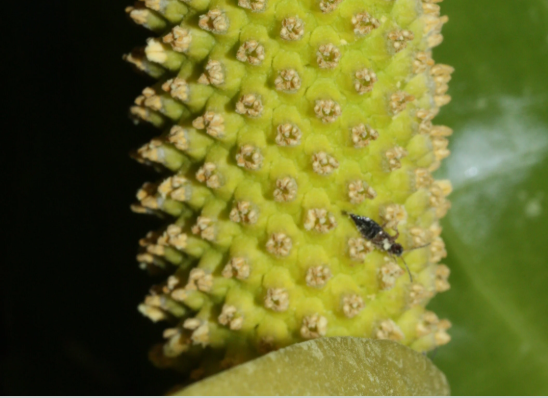
The volatile compounds aren’t there to trick the beetles into thinking they are getting some sort of reward. The plant actually rewards the rove beetles with pollen to eat and a relatively safe place to mate. We call these types of signals “honest signals” as they act as an honest calling card that signifies rewards are to be had.
"There are some optimists who search eagerly for the skunk cabbage which in February sometimes pushes itself up through the ice, and who call it a sign of spring. I wish that I could feel that way about it, but I do not. The truth of the matter, to me, is simply that skunk cabbage blooms in the winter time." — Joseph Wood Krutch


Comments